Welcome to South South Cooperation Network

Global South-South Development Center Project

2021-09-14 16:04:05 Exellent Case
The year 2019 marked the beginning of a transformative era for South-South and triangular cooperation, with the conclusion of the second High-level United Nations Conference on South-South Cooperation in Buenos Aires and the adoption of its outcome document. South-South cooperation (SSC) is now emphasized in over 80 States as part of the United Nations Sustainable Development Cooperation Framework, and that there has been a surge in new partnerships. As the largest developing country, China has been an active advocate and promoter of SSC. Nevertheless, South-South and triangular cooperation still face a number of significant challenges at the international level, as well as in China. For example, much of the transfer of knowledge and skills has been one way, and most activities are still carried out by Governments, with minimal participation from the private sector. In addition, the mobilization of funds is limited, and they are not used efficiently

Full text of BRICS Summit New Delhi Declaration

2021-09-14 00:00:00 China News
the 13th BRICS Summit was held on 9,Sep.2021,This is the full text of the 13th BRICS Summit New Delhi Declaration:

Full text of Chinese President Xi Jinping's remarks at 13th BRICS Summit

2021-09-13 00:00:00 China News
Chinese President Xi Jinping addressed the 13th BRICS Summit on 9,Sep.2021 via video link in Beijing.this is the full text of the speech:

South-South Cooperation Event Debuts at CIFTIS —2021 International Forum on South-South Cooperation and Trade in Services Concludes Successfully

2021-09-06 10:11:30 Gssdc
On September 4, the 2021 International Forum on South-South Cooperation and Trade in Services with the theme of “Digital Economy for South-South Cooperation” was held at China National Convention Center. It was the first of its kind during China International Fair for Trade in Services (CIFTIS) centering on South-South cooperation.

Promoting Affordable Prefabricated Housing in Liberia

2021-08-31 10:05:15 Exellent Case
With a fast-growing population and rapid urbanization process, many African countries now face increasing pressure to provide adequate housing for their citizens. Over the past 10 years since the end of the civil war in Liberia, the country has been vigorously developing its infrastructure, attracting foreign investment, developing production and aiming to achieve long-term peace and stability in order to revitalize the economy and improve livelihoods. As one of the mportant components in infrastructure construction, the development of civil, commercial and industrial buildings and other projects are essential to improve livelihoods and stimulate economic development. However, the lack of local construction materials and a small manufacturing sector, with only one cement factory in Liberia, have impacted infrastructure development.

Maritime-Continental Silk Road Cities Alliance

2021-08-18 15:13:03 Exellent Case
The world is rapidly urbanizing. In 2008, for the first time in recorded human history more than half the world’s population, 3.3 billion people, lived in urban areas. By 2030, it is estimated that this number will have increased to five billion. Cities play a pivotal role in economic growth and have therefore become a front-line in efforts to address social and economic development challenges. However, the negative impact of urbanization is increasingly being recognized. Cities can exhibit extreme, densely concentrated forms of poverty and inequality and significantly contribute to other global issues such as climate change. Particularly in the developing world, cities often lack much-needed infrastructure, urban planning capacity, while exhibiting weak institutions such as limited data availability, collection and analysis, and limited social protection. These can limit the ability of cities to contribute to the achievement of the sustainable development agenda.

Strengthening Africa's Television Dubbing Skills

2021-08-17 14:06:20 Exellent Case
Africa is on track towards rapid development and its cultural industries need to be developed simultaneously. As a key component of the broadcast and television industry, dubbing is important not only to introduce outstanding overseas programmes into Africa to promote knowledge and learning, but also to develop the African television and broadcasting industry as a whole. Currently, dubbing in Africa faces two challenges: the lack of professional voiceover actors and actresses and the lack of professional dubbing technology. These challenges can be observed particularly in the United Republic of Tanzania. Given economic and social evelopment advances, demand is rising for wider television broadcast coverage and richer programme content, especially for earning. The translation of foreign TV programmes is an important source for content providers. Therefore, international support in dubbing, including technologies and skills, are greatly needed.

Introduction of the Member Institution——Wuhan International Culture Exchange Center

2021-08-10 16:19:16 China News
Wuhan International Culture Exchange Center is a public institution founded as approved by Wuhan Municipal People’s Government and under the charge of the General Office of Wuhan Municipal People’s Government.

Hands-on Training on the Use of Fibre-reinforced Plastic Biogas Digester in Samoa

2021-08-10 11:02:00 Exellent Case
In most developing countries, agricultural wastes are left untreated, which may cause environment pollution and animal-human disease transmission. Moreover, farmers have limited access to modern energy such as kerosene, liquefied gas and electricity, which leads to deforestation, water loss and soil erosion. Women and children are overburdened with low-value work, such as the collection of firewood and cow dung for cooking. Moreover, the overuse of chemical fertilizers is a threat to soil, ecosystem and human health. The above issues have impacted the sustainable development of the vulnerable small island countries such as Samoa. Based on the common goal of tackling climate change and the energy shortage, some countries have independently or jointly developed biogas in the pursuit of their environmental, economic, health and social benefits. Since the natural environment and social conditions differ from region to region, and country to country, identifying the most suitable biogas model in a country is still a challenge

Introduction of the Member Institution——UNIDO Center for South-South Industrial Cooperation (China)

2021-08-02 15:16:04 China News
Established in 2008, UNIDO Centre for South-South Industrial Cooperation in China (UCSSIC China) is a flagship project jointly established by MOFCOM, UNIDO and CICETE, which aims to create a practical, institutional, and operational platform for South-South and Triangular and Industrial Cooperation (SSTIC) and inclusive and sustainable industrial development (ISID) in partnership with relevant institutions, counterparts and stakeholders both in and outside of China.
Date
  • 2021
  • 2020
  • 2019
  • 2018
  • 2107
  • 2016
  • 2015
Related News
  • International Forum on Biomass Energy Utilization Technology Ushers in a New Era of Industry
  • Seminar on Electrification Mode Based on Clean Energy for BRI Countries Held in Hangzhou
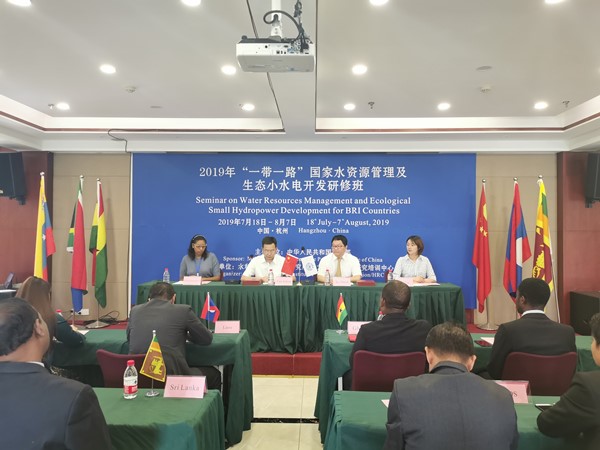
  • Seminar on Water Resources Management and Ecological Small Hydropower Development for BRI Countries Held Successfully in Hangzhou